

The Hidden Psychology Behind Esports Excellence
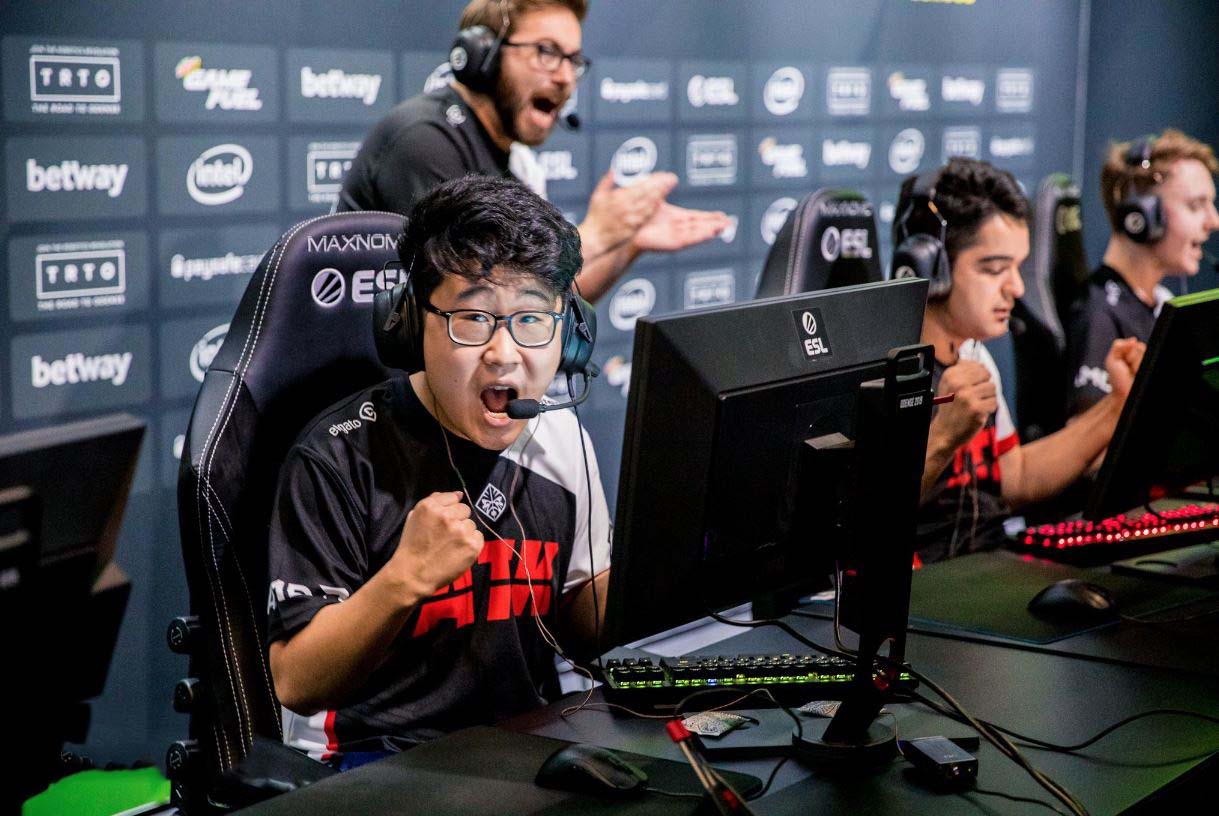
Understanding How Mental Strength, Focus, and Emotional Control Define the Difference Between Good Players and True Champions
The Mental Battlefield of Competitive Gaming
Every esports competition unfolds on two stages. The first is visible, where players execute precise movements, strategize in real time, and react faster than instinct. The second is invisible, existing entirely within the mind. It is here, in the realm of focus, emotion, and resilience, that the outcome of every match is truly determined. While audiences marvel at reflexes and tactics, the psychological struggle happening beneath the surface is what separates those who play well from those who win consistently. The mind is both weapon and weakness, and mastering it is the ultimate challenge of professional gaming.
Unlike physical sports, esports demand sustained cognitive performance under immense pressure. Players must process information at lightning speed, anticipate opponent behavior, and execute flawless precision with millisecond timing. All of this occurs while the mind battles fatigue, distraction, and self-doubt. The modern professional gamer is, therefore, not just an athlete of reflexes but an athlete of attention. Understanding how focus and mental stability work in high-stress conditions has become as important as understanding game mechanics. This psychological dimension has redefined training in esports, introducing new disciplines that combine neuroscience, mindfulness, and behavioral science into competitive preparation.
The Power of Focus in Competitive Environments
Focus is the foundation of high performance in esports. It is the ability to sustain attention on a goal despite the chaos that surrounds it. Every professional player faces a storm of stimuli: flashing lights, roaring crowds, teammates communicating rapidly, and opponents executing unpredictable strategies. In these moments, distractions are the enemy of performance. True focus is not merely about concentration, but about filtering. It involves the brain’s ability to prioritize relevant information while silencing everything else that competes for attention.
Players train to refine focus through repetition, structure, and environment control. Many teams now integrate cognitive training programs that enhance working memory and reaction precision. This includes exercises designed to simulate competitive pressure, helping players learn to recover concentration after mistakes. The goal is to achieve what sports psychologists call “cognitive flow,” a state where focus becomes effortless and self-awareness dissolves into pure execution. Achieving this state transforms gameplay from reactionary to instinctive, allowing players to operate at their full potential. The ability to reach and maintain focus under fire has become one of the most valuable skills in modern esports.
The Science of Flow and Peak Performance
Flow is one of the most studied yet mysterious phenomena in performance psychology. It is a mental state where skill, challenge, and focus align perfectly. When a player enters flow, time seems to slow down, decisions feel automatic, and the boundary between mind and game disappears. Every move becomes precise, and every reaction feels natural. The flow state represents the height of competitive performance, where the brain operates with maximum efficiency and minimal resistance. It is the holy grail of mental mastery in esports.
Reaching flow, however, is not accidental. It requires balance. The challenge of the task must match the player’s skill level. If the game feels too easy, boredom sets in. If it feels too difficult, anxiety disrupts concentration. Coaches and performance psychologists design training programs that help players find this equilibrium. Routine plays a key role in this process. Warm-up exercises, visualization, and mental rehearsals create a familiar rhythm that prepares the brain for flow. Over time, players learn to recognize their triggers for entering this state, such as specific sound cues or breathing patterns. Once mastered, flow becomes a mental superpower that turns competition into an experience of total immersion and control.
Emotional Regulation and the Psychology of Pressure
Pressure is the silent opponent in every esports arena. The expectations of fans, the weight of sponsors, and the magnitude of global stages can overwhelm even the most skilled players. The ability to manage these emotions determines how effectively a competitor performs under stress. Emotional regulation is not about suppressing feelings but about channeling them constructively. Anger, fear, and frustration can either fuel focus or destroy it. The difference lies in awareness and control.
Modern teams employ psychologists who specialize in performance emotion management. They teach players techniques such as mindfulness, breathing control, and cognitive reframing. These methods help convert negative emotions into concentration and momentum. Visualization is another critical tool, allowing players to mentally rehearse pressure scenarios until they feel familiar. Over time, the brain learns to respond to stress as a challenge instead of a threat. This shift in perception transforms anxiety into adrenaline, turning nervous energy into productive intensity. Emotional resilience becomes the armor that protects consistency in the unpredictable world of competition.
Building Mental Resilience Through Failure
Failure is inevitable in any competitive pursuit, but in esports, where careers unfold under public scrutiny, it can feel devastating. Every mistake is recorded, analyzed, and discussed. Yet, for elite players, failure becomes the most valuable teacher. Mental resilience is forged in moments of defeat, where the choice between frustration and growth determines long-term success. The most accomplished competitors view setbacks not as losses but as lessons, opportunities to recalibrate and evolve.
Resilience training focuses on developing a growth mindset. Players are encouraged to focus on process over outcome, measuring success by improvement rather than immediate results. Teams often conduct post-match reviews designed not to assign blame but to identify patterns and solutions. This culture of reflection builds confidence and adaptability. It also prevents burnout, a common issue in esports where the grind of constant practice can erode motivation. By reframing failure as feedback, players cultivate endurance that extends beyond the game. Mental resilience becomes the invisible backbone that sustains champions through the highs and lows of their careers.
The Role of Team Dynamics in Psychological Stability
Esports is often perceived as an individual test of skill, yet it is fundamentally a team endeavor. Behind every player’s performance lies a network of communication, coordination, and trust. Psychological harmony within a team can elevate performance, while discord can destroy it. Team chemistry relies on emotional intelligence, empathy, and communication clarity. Players must learn to manage their own emotions while understanding the emotional states of their teammates. The balance between individuality and cohesion becomes critical to long-term success.
Coaches invest heavily in building mental unity through structured team exercises and communication training. This includes role definition, conflict resolution, and trust-building practices. Analysts contribute by mapping communication patterns to identify breakdowns under pressure. When players share a unified mindset, they enter what many describe as “collective flow,” a state where team coordination feels effortless and instinctive. In this state, decisions align naturally, and execution becomes synchronized. Psychological stability within teams does not just enhance performance, it creates an environment where individuals thrive collectively, turning competition into collaboration at the highest level.
Mindfulness and the Modern Esports Athlete
Mindfulness has become a cornerstone of mental conditioning in esports. It teaches players to focus on the present moment, reducing distractions from both external and internal noise. In a world driven by rapid decisions and constant motion, mindfulness offers stillness. By grounding themselves through breathing and sensory awareness, players learn to anchor their attention when it begins to drift. This practice not only improves focus but also strengthens emotional regulation and recovery.
Many professional players incorporate mindfulness into daily routines through meditation, journaling, and visualization. These habits prepare the mind to remain calm and centered under competitive stress. Teams like Astralis, T1, and Cloud9 have publicly discussed how mindfulness training contributed to consistent performance. The philosophy aligns perfectly with the demands of esports, where milliseconds define outcomes. A single distracted thought can cost a round, a match, or even a championship. Mindfulness transforms that vulnerability into power by teaching players to stay present, aware, and adaptable no matter the circumstances.
The Connection Between Physical Health and Mental Strength
While esports is a digital sport, the physical condition of the player still heavily influences mental performance. Fatigue, poor nutrition, and irregular sleep can impair reaction time, decision-making, and focus. The body and mind function as a single unit, and when one suffers, the other follows. Recognizing this, professional teams have begun integrating physical conditioning into their training programs. Exercise, balanced diets, and regulated rest cycles are now as essential as scrimmages and strategy reviews.
Physical wellness also reinforces resilience. Exercise releases endorphins that reduce stress and elevate mood, while consistent sleep stabilizes attention and memory. Proper posture and ergonomic setups prevent physical discomfort that can lead to mental distraction. Nutrition plays a critical role as well, with players adopting meal plans that support sustained energy and cognitive clarity. This holistic approach to training reflects a growing understanding that mental performance is not isolated from physical health. The modern esports athlete is trained to nurture both body and mind, creating equilibrium that supports long-term excellence.
The Role of Coaching in Mental Development
Esports coaching has evolved beyond strategy and mechanics. Today’s coaches act as mental architects, helping players build psychological fortitude alongside technical skills. They work closely with sports psychologists to design individualized programs that address stress management, confidence building, and emotional control. This partnership ensures that mental conditioning receives the same level of importance as tactical preparation. Coaches also serve as mentors, offering stability and perspective during competitive uncertainty.
One of the most valuable coaching techniques involves reflective communication. Instead of simply correcting mistakes, coaches guide players to identify their own cognitive patterns. This promotes self-awareness, a key component of mental mastery. Players learn to recognize when their focus drifts or when frustration begins to rise, allowing them to recalibrate in real time. Through consistent mentorship, coaches transform potential into professionalism. Their influence shapes not only performance outcomes but also the emotional maturity that defines sustainable success in esports.
The Future of Psychological Training in Esports
The psychological evolution of esports is still in its early stages, yet its impact is undeniable. As the industry continues to professionalize, mental conditioning will become as standard as hardware upgrades or tactical boot camps. Teams will invest more deeply in neuroscience research, biofeedback systems, and mental health infrastructure. Training will extend beyond improving focus or reaction time, encompassing emotional literacy, empathy, and ethical leadership. The esports athlete of the future will not just be faster or smarter but mentally stronger, capable of adapting to any challenge the game presents.
At its core, competitive gaming is a human experience. It tests intellect, discipline, and spirit in ways that mirror life itself. The pursuit of mastery is not limited to reflexes or rankings. It is the pursuit of balance between mind and machine, emotion and logic, individuality and teamwork. The psychology of esports reminds us that victory is not achieved through mechanical precision alone but through mental harmony. The champions who understand this truth will continue to redefine what it means to compete, proving that in the digital age, the greatest power still lies within the human mind.